A much more current study at Columbia University supplies clear proof that a single alpha fragment can cause anomalies and chromosome aberrations in cells that got no direct radiation direct exposure to their DNA. The radon daughters additionally emit beta fragments as well as gamma rays that take a trip further with the body. Beta bits travel as much as 1 to 2 centimeters in human tissue. Many gamma rays, being more energetic than x-rays, go through the body to the exterior. Since the soaked up beta and gamma radiation is topped a larger quantity, it is less focused and less harmful.
Is radon something to worry about?
The average home has about 1.3 pCi/L of radon. Such levels aren't enough to worry about, but under the right conditions, they could make you sick. According to the EPA, a nonsmoker who was exposed to average levels of radon for a lifetime would have a 1 in 500 risk of developing lung cancer.
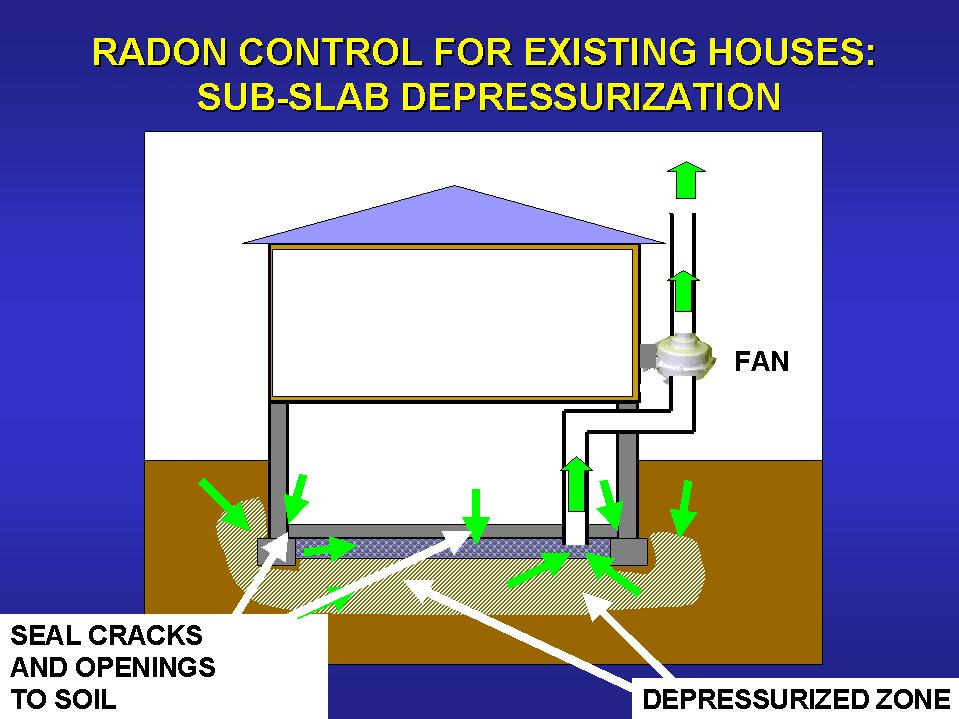
Some States preserve checklists of service providers available in their state or they have effectiveness programs or demands of their own. The system draws the radon-laden soil gas from underneath the foundation as well as tires it outside of the building, far sufficient away from home windows and various other openings that it will certainly not reenter. The system normally includes a plastic pipe attached to the soil via an opening in a slab floor, through a sump lid link, or beneath a plastic sheet in a crawl space.
What are the chances of getting lung cancer from radon?
Granite, like any other stone, may contain veins of naturally occurring radioactive elements like uranium, thorium, and their radioactive decay products. If present, uranium, thorium or radium will decay into radon, a colorless, odorless, radioactive gas that may cause lung cancer.
Just how Difficult Is It to Offer a Home with High Radon Levels?
Practically anywhere else that uses the statistics system, including the Globe Health Company, measures in Becquerels. They must additionally be able to offer ideas for maintaining your house risk-free, such as consistently looking for and also sealing up splits in your foundation. Available in both lasting and short-term surveillance, the tests are very easy to use and also require marginal arrangement.
Can you smell radon?
The “safe” level of radon exposure is no radon at all. The EPA's recommended level for radon mitigation is 4.0 pCi/L or above. It's estimated that 1 in 15 American homes have an elevated level of radon gas.
It's likewise crucial to follow preferred screening standards, which can aid discover specific cancers early.
Would you buy a house with radon?
Radon is a naturally occurring radioactive gas which may be found in indoor environments such as homes, schools, and workplaces. Radon is the most important cause of lung cancer after smoking.
This allows radon to move under your house, yet it only functions if you have a basement or piece structure. Radon can turn up through the ground and also into your residence with splits in the structure. Once it's via the fractures, it can get caught inside, where it builds up.
Can I install my own radon mitigation system?
In most cases, pros charge about $1,500 to install a radon mitigation system, but you can do it yourself for only about $500 in materials. So if you're fairly handy and have some carpentry, plumbing and electrical skills, you can install your own system in a weekend and save yourself a thousand bucks!
Does seller have to fix radon?
It's very likely that your future buyer will make you fix the radon problem before they will purchase the home. It's good to just take care of it during your real estate deal. Sometimes the seller pays for it all, sometimes they fund a credit and sometimes there is a split.
Why is radon bad for you?
Radon produces a radioactive dust in the air we breathe. The dust is trapped in our airways and emits radiation that damages the inside of our lungs. This damage, like the damage caused by smoking, increases our risk of lung cancer.
How long do you have to be exposed to radon before it becomes a problem?
Radon is a radioactive gas and exposure to it causes 21,000 lung cancer deaths per year—only smoking causes more. Because you can't see, smell or taste radon, it's important to periodically test the air in your home. Believing you live in a region not affected by radon is just one of the myths about this deadly gas.
Where is radon found in the home?
Radon is a radioactive gas that has been found in homes all over the United States. It comes from the natural breakdown of uranium in soil, rock, and water and gets into the air you breathe. Radon typically moves up through the ground to the air above and into your home through cracks and other holes in the foundation.
- When its validated radon level is 2.7 pCi/L or over, the World Health Company recommend that a residence be alleviated.
- This option allows total threats from direct exposure to radon, both through air and also water, to be decreased.
- High degrees of radon in homes can be efficiently remediated by securing such entry points as well as by mounting sufficient air flow.
- No level of radon direct exposure is considered totally risk-free, nevertheless the EPA just suggests lowering radon degrees in your home if your long-lasting direct exposure averages 4 picocuries per litre (pCI/L) or greater.
- If you have examined the air in your house and discovered a radon issue, and also your water comes from a well, have your water tested.
- The systems develop constant vacuum cleaner in the dirt under basements, concrete slabs and crawlspaces.
Is a radon level of 5 bad?
Safe radon levels. The best radon level measurement would be zero. The average global outdoor radon level varies between 5-15 Bq/m3, equal to 0.135-0.405 pCi/L. For every 99.9 Bq/m3, or every 2.7 pCI/L increase in long term radon exposure, lung cancer risk rises 16 percent.
Who is most at risk of lung cancer?
The more uranium there is, the more radon there is. That makes radon the second leading cause of lung cancer after smoking. But even minor symptoms like headaches, feeling unusually tired, itching or burning eyes, irritated skin, nasal congestion, a dry throat or nausea could be due to your home's indoor air quality.
What do you do if your house has radon?
Radon can seep into any home that is in contact with the ground. It is undetectable unless you perform a radon test. It is the second leading cause of lung cancer and according to the EPA and CDC, it kills more than 20,000 annually. It is not something you want in the home you are buying.
Is radon only in the basement?
Radon is completely odorless as well as being invisible. Because it is often found unexpectedly in basements, some people mistakenly believe that it only occurs in basements. Most commonly homes with basements are suspect for having higher radon levels.
Is radon really a big deal?
Radon is a radioactive gas that has been found in homes all over the United States. It comes from the natural breakdown of uranium in soil, rock, and water and gets into the air you breathe. Radon typically moves up through the ground to the air above and into your home through cracks and other holes in the foundation.
How effective is radon remediation?
The Surgeon General and the EPA recommend testing for radon and reducing radon in homes that have high levels. Fix your home if your radon level is confirmed to be 4 picocuries per liter (pCi/L) or higher. Radon reduction systems work. Some radon reduction systems can reduce radon levels in your home by up to 99%.
How bad is a radon level of 8?
The EPA strongly recommends radon mitigation if your radon levels are above 4 pCi/L. While radon levels below 4 still pose a health risk. They recommend you consider mitigation if your radon levels are between 2 and 4 pCi/L. They are quick to point out that there is no known safe level of radon.
What causes radon?
Being exposed to radon for a long period of time can lead to lung cancer. Radon gas in the air breaks down into tiny radioactive elements (radon progeny) that can lodge in the lining of the lungs, where they can give off radiation. This radiation can damage lung cells and eventually lead to lung cancer.
How do you get rid of radon gas in a basement?
The radon fans are guaranteed by manufacturers for 3 – 5 years. Their replacement cost, including installation, is usually $300 to $600. Homeowners are aware that the fan must run continuously 24/7, year after year. The Continue reading typical estimate of the electricity cost is $150 per year.
Does Radon make you tired?
The more uranium there is, the more radon there is. That makes radon the second leading cause of lung cancer after smoking. But even minor symptoms like headaches, feeling unusually tired, itching or burning eyes, irritated skin, nasal congestion, get more info a dry throat or nausea could be due to your home's indoor air quality.
Is a radon level of 2 safe?
Radon levels are measured in picocuries per liter, or pCi/L. Levels of 4 pCi/L or higher are considered hazardous. Radon levels less than 4 pCi/L still pose a risk and in many cases can be reduced, although it is difficult to reduce levels below 2 pCi/L. Once installed, a follow-up radon test is done.
How many people die each year from radon?
Radon is responsible for about 21,000 lung cancer https://sordus35v2.doodlekit.com/blog/entry/10532027/radon-summary deaths every year. About 2,900 of these deaths occur among people who have never smoked.